Peter Sutherland’s death
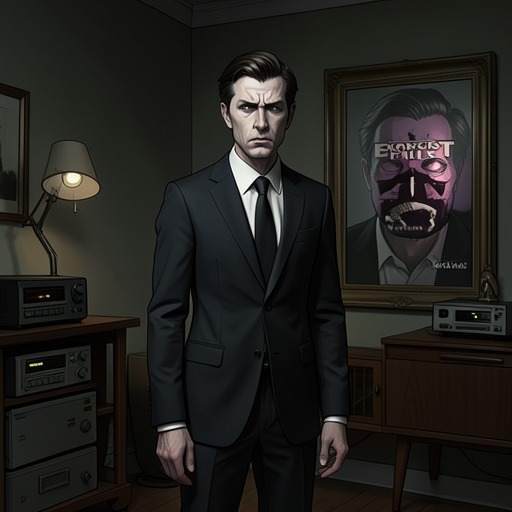
Exorcist FallsPeter Sutherland’s death is the violent rupture of Jason Crowder’s trust in his mentor. In Casey Hartman’s bedroom, Crowder confronts Sutherland over the Sweet Sixteen killings; their argument becomes a fight, and Crowder throws the priest through a broken window into the storm below.
Accusation and Escalation
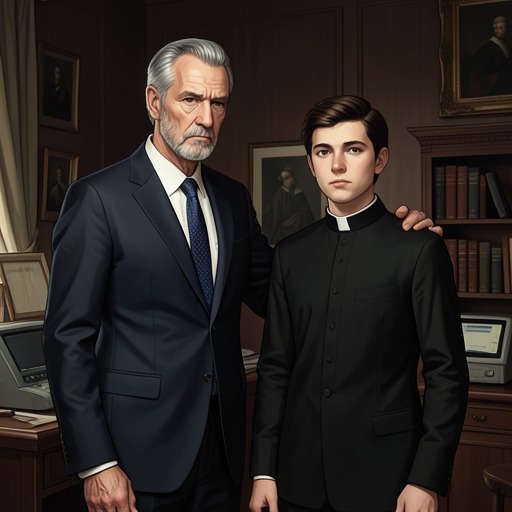
Crowder’s certainty that he knows the truth turns the confrontation from questioning into accusation. He presses Sutherland about how the murdered girls were chosen and whether they were connected to the church, challenging the priest’s authority and the account of their relationship. Sutherland answers by recalling that he took Crowder in, trained and counseled him, supported his progress with his superiors, and helped him through his fear of women. The appeal to their history cannot quiet the suspicion: Crowder asks whether Sutherland’s interest was in young girls, and Sutherland angrily denies killing them, insisting that he has made mistakes like any man.
Sutherland then frames Crowder’s decision to believe the accusation as siding with evil. Crowder shoves him; Sutherland recovers and strikes Crowder across the jaw, then beats him while denouncing him as a betrayer and deceiver. Crowder fears that losing consciousness will mean death. If Sutherland is the Sweet Sixteen Killer, Crowder reasons, the priest is already a practiced murderer and may kill the other people in the house rather than leave witnesses behind. That fear brings Crowder back into the struggle, where the former mentor is no longer simply an authority being challenged but an immediate threat.
The Fight and Fatal Fall
Crowder tried to stop Sutherland from leaving, pushing him back toward Casey’s bed and considering whether Danny Hartman’s handcuffs could keep him in the house. Sutherland answered with a right-handed blow to Crowder’s jaw, then drove him down with a barrage of punches. As Crowder struggled to stay conscious, he feared that the priest might kill not only him but also the Hartman family, whose testimony could obstruct Sutherland’s escape.
Crowder recovered enough to fight back. When Sutherland moved toward the door, Crowder caught him and slammed him against the wall, then bit into his throat and tore away flesh. He throttled Sutherland and struck him in the face, sending him into Casey’s window; the pane shattered, opening the bedroom to the storm. Crowder understood the struggle as a choice between their lives: he believed Sutherland would have killed him if he had not resisted, and that only one of them would leave the room alive.
Crowder lifted Sutherland against the damaged window, and the remaining glass gave way. With wind and rain blowing through the opening, Sutherland pleaded for mercy and forgiveness. Crowder cast him outside. From the jagged opening, Crowder saw Sutherland plummet to the Hartmans’ concrete patio and land face-first, shattering his skull. The priest’s body lay motionless as rain washed away the blood.
After staring down at the body for about a minute, Crowder turned and saw Danny watching from the doorway. The death thus ends the physical confrontation but does not settle the question of Crowder’s guilt or judgment: he has killed the man who was his mentor, and the sight of the body becomes part of the burden he carries afterward.
Evidence After the Death
The later search of Sutherland’s study complicated the accusation that had ended in his death. A floorboard had been repeatedly lifted and replaced; when Danny Hartman pried it up, the shallow space beneath contained no keepsakes from the six murdered girls, only a recent Penthouse and an old Hustler. Crowder began to weep. The hiding place looked suspicious, but what it concealed did not support the specific suspicion that Sutherland had collected mementos of the victims.
Crowder eventually named the deeper consequence as another failure of judgment: he had again believed an innocent man guilty of murder. His grief surfaced as he fled down the basement stairwell, grateful that no parishioners or employees could see his tears. Sutherland’s death therefore becomes more than the fatal end of their confrontation. It marks a conviction acted upon before Crowder could establish the truth, leaving him to confront not only the loss of his mentor but the possibility that his certainty had helped make an innocent man’s death irreversible.
The Burden of Judgment
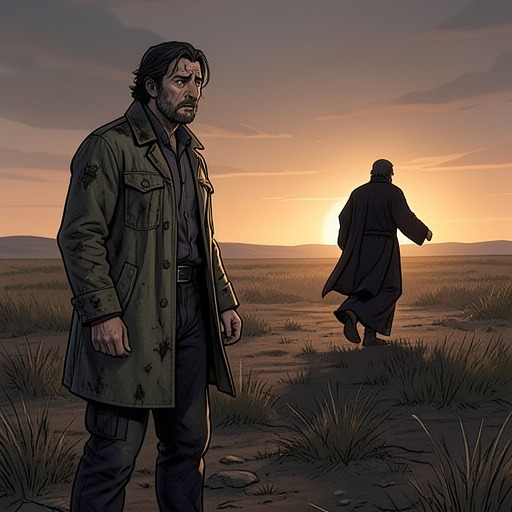
The death’s moral weight resurfaces in Crowder’s later reckoning at the reservoir. Plunging into its violent waters, he believes the Sweet Sixteen killers will terrorize the city no longer, but recognizes that his own survival could let the demon escape; he thinks Chicago would be safer if he died with it trapped inside his body. He also believes he deserves punishment, perhaps even death, yet still wants to live. That conflict does not erase his responsibility for Sutherland’s fall: it places the killing within a larger struggle between the wish to stop evil and the terrible cost of acting under uncertainty.